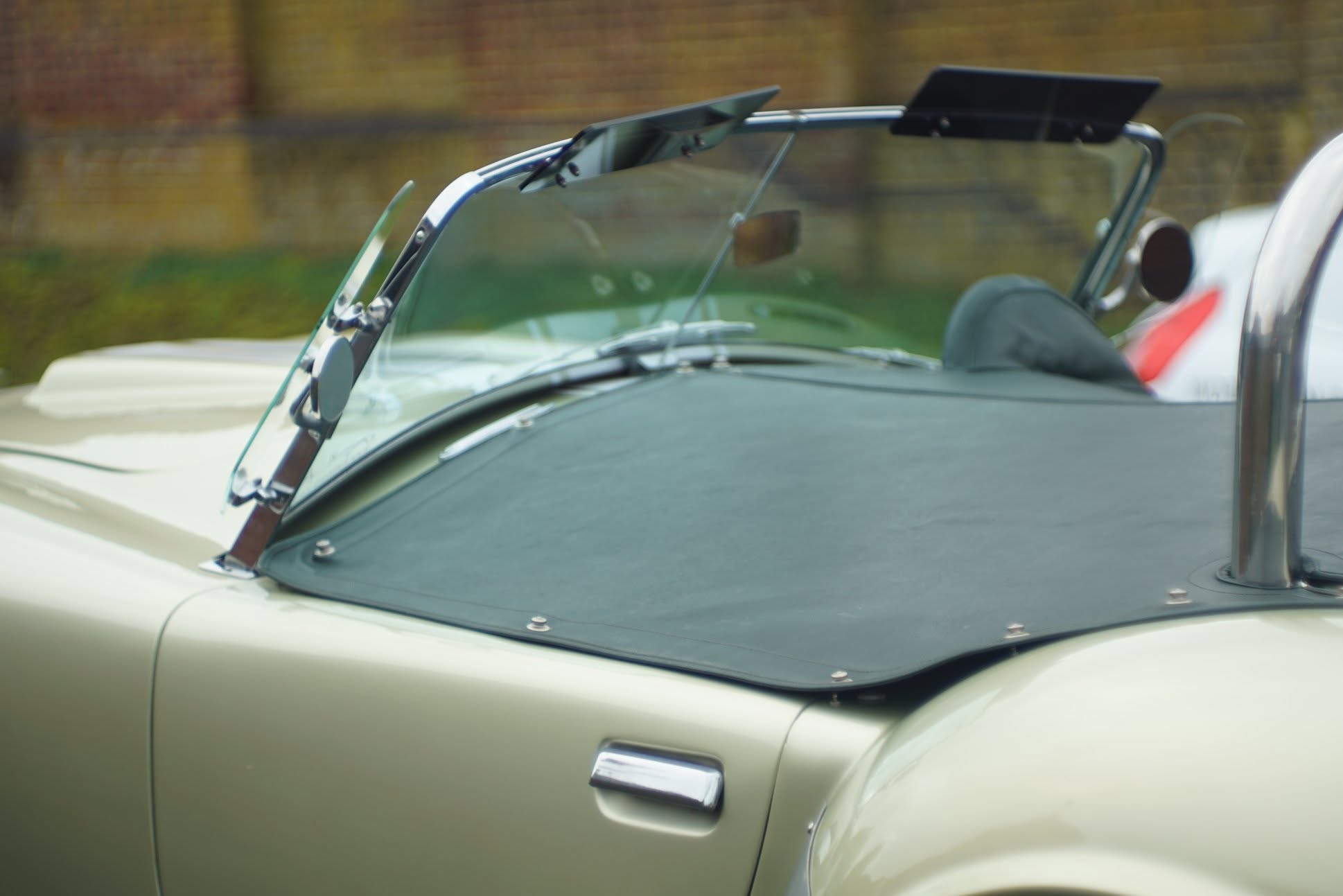
Some cars arrive with a reputation already attached. A badge on the bonnet. A famous name. A history everyone recognises before the engine is started.
This was not one of those cars. It arrived without the things people usually look for. No Cobra badges. No attempt to pretend it was something it was not. Just a shape that made people ask the inevitable question.
“Is it a real Cobra?”
It is a simple question. It is also the wrong one.
Because some cars are built to recreate history. Others are built because someone was inspired by history and decided to make something of their own.
This car belongs to the second kind.

It began in Kent, in the early 1990s, when Ian Walker decided to build the sports car he wanted to drive. Not a replica. Not an imitation. A personal interpretation of an idea that had stayed with him since a moment at a set of traffic lights decades earlier.
A young man in a Triumph had seen an AC Cobra disappear ahead of him when the lights changed. The car was gone before he had time to understand what had happened.
He never forgot it.
Years later, he built his own version of that feeling.
The result was a Pilgrim Sumo with no Cobra badges, a Ford Essex V6, carefully chosen components, and decisions that only make sense when you understand the person behind them.
The engine came from Nick Whiting, a British saloon car champion whose own racing history gave the car a connection to another era of motorsport. The dashboard carried instruments connected to Carroll Shelby’s own workshop in California. The wheels reflected Ian’s knowledge of competition history rather than expectation.
Nothing was added because it was expected. Everything was there because it meant something.

Decades later, the car changed hands. The new owner did not inherit a finished object. He inherited a collection of decisions.
The question was no longer: “What is this car?”
The question became: “Why was it built this way?”
That question opened everything else. The photographs. The invoices. The conversations. The forgotten parts kept in storage for more than thirty years. The stories that existed nowhere except in the memory of the people who had been there.
A car is often described by what it copies.
This one is better understood by what it remembers.
Road Note
Location: Kent, UK
Date: July 2026
Subject: The Green Car
Classification: Personal Machines & Their Histories
Archive: PIAFEIRA
