The past month has been spent, for the most part, away from the cap itself — waiting on the first Laird sample, developing the straps, making more, continuing the research, and testing the cap out in the world rather than on a bench.
The leather strap has come good. Ollie Leston said it “smells the way leather should, and it sits very well along the brim.” Worn while driving, the strap does the strange thing of making you forget the cap is there at all.
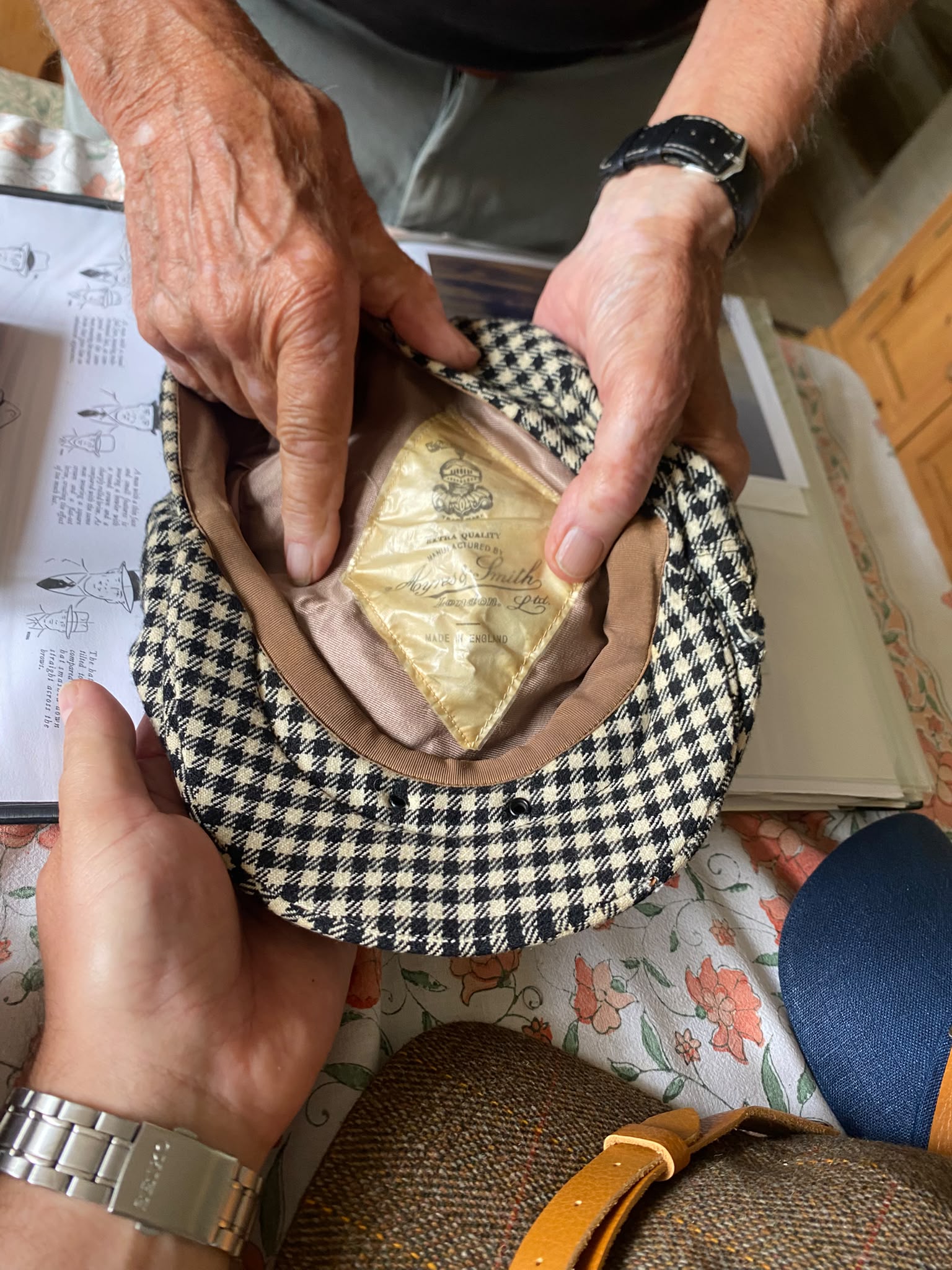
A morning with Bill Vero opened up more than expected. Three generations of hatmaking and vintage racing helmets, and an archive full of stories, context, and small connections I hadn’t known to look for. He was generous with all of it.
Then the coincidences began to line up in a way that is hard to ignore. My Cobra was built by Ian Walker, who worked at Haynes in Maidstone. David Haynes, who ran the company, was one of Stirling Moss’s closest friends and acted as his manager racing abroad in 1960 and 1961. Bill Vero told me he hand-made and hand-painted a helmet for Moss. Vero’s family made helmets for Les Leston, and Bill delivered them himself — he has said how much he loved those visits to the racing shops. And Ollie Leston, of the Les Leston family, has just carried out Run Trial 001.
I don’t quite know what to do with a chain like that, except notice it. It is a strange reminder that the world can still feel small by leaving the house, rather than scrolling through it.
The trial itself mattered as much as anything made this month. Ollie liked the cap, and was about to set off on a road trip; we handed over two and stepped back. It felt less like a launch than like releasing an animal into the wild to see how it behaves. No photographs came back, no posts — only a conversation, in person, about what he actually thought.
There is honest work still ahead on where and how these caps are made, and what “British” can and cannot mean in a trade that has lost much of its capacity. That is a subject for another entry, once there is more to say than there are certainties.
The problem is real enough — a cap leaving your head at speed is something many people know and few admit to. But that no longer feels like the whole story.


